What is wind foiling? 12-most-frequently-asked-questions-answered Wind foiling, feeling able to fly The Foiling Revolution This Is Why I Started Wing Foiling -BEYOND THE REEF -The Early promise -Windsurf foiling and wing foiling: 5 differences between the two awesome activities. -The Best Places to Wing Foil in the United States -WingFoil Schools Worldwide -How to choose the right equipment for Wing Foiling (Beginner Version) -Choosing Your Wings: A Guide to Wing Foil Wimg Sizes -What Is Wing Foiling? -What is foiling anyway?
|
| What is foiling anyway? |
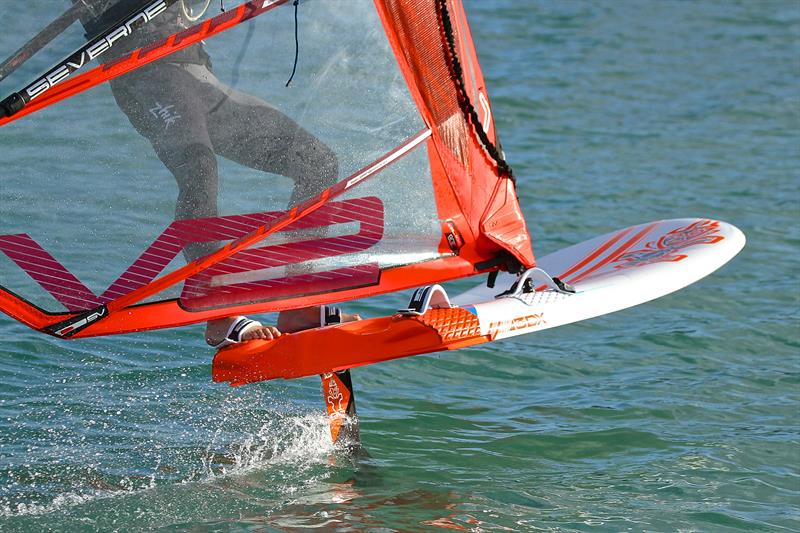 |
Hydrofoiling is a relatively new sport that has gained popularity in recent years. It is a technique that involves riding a hydrofoil board, which is a board that has a hydrofoil attached to the bottom. The hydrofoil is a wing-like structure that extends down into the water and creates lift as it moves through the water. This allows the rider to achieve lift above the water surface.
There are several types of foiling, including windfoiling, wingfoiling, kitefoiling, efoiling, wakefoiling, SUPfoiling, and surf foiling.'Different equipment and techniques are required to engage in each of these disciplines. Foiling has become popular because it allows riders to move through the water with much less wind or energy than they would be able to without a foil. When foiling, the entire board is out of the water, which means there's no drag or friction on it slowing you down. The result is that you can ride in much lower wind velocities than without the foil.
What is a Hydrofoil?
A hydrofoil is a wing-like structure that is attached to the bottom of a board, such as a surfboard, kiteboard, or stand-up paddleboard. When the board is in motion, the hydrofoil generates lift, lifting the board out of the water and reducing drag. This allows riders to glide smoothly above the water's surface, providing a sensation of flying.
The design of a hydrofoil consists of several components, including the foil head, foil mast, fuselage, front wing, and stabilizer. These components work together to provide lift, stability, and maneuverability on the water.
The foil head is the part that connects the hydrofoil to the board. It can be fixed or adjustable, depending on the type of board and the rider's preference. The foil mast is the vertical pole that connects the foil head to the fuselage. The length of the mast determines how high the board can fly above the water. Longer masts provide more leeway for overfoiling and offer stability, while shorter masts offer zippier turns.
The fuselage is the horizontal beam that connects the front wing and the stabilizer. It acts as the backbone of the hydrofoil and affects the balance and performance of the board. Longer fuselages help with earlier takeoffs and stability, while shorter fuselages are better for maneuverability.
The front wing is the main source of lift for the hydrofoil. It is usually shaped like an airplane wing, with a curved profile and a tapered tip. The size, shape, and angle of the front wing determine how much lift, speed, and drag the hydrofoil generates. There are two main types of hydrofoil wings: low aspect and high aspect. Low aspect wings have a wider span and a shorter chord, while high aspect wings have a narrower span and a longer chord. Low aspect wings are easier to control and more forgiving, while high aspect wings are faster and more efficient.
The stabilizer is the smaller wing that is located at the rear of the fuselage. It helps to counteract the pitching and yawing motions of the board and to keep the hydrofoil stable and aligned. The size, shape, and angle of the stabilizer also affect the performance of the hydrofoil. Larger stabilizers provide more stability and control, while smaller stabilizers allow for more agility and speed.
Types of Hydrofoil Boards:
Hydrofoil boards are boards that are equipped with a hydrofoil. They can be classified into different categories, depending on the type of propulsion and the type of board. The most common types of hydrofoil boards are:
¥ Surf foil boards: These are surfboards that have a hydrofoil attached to them. They can be used to catch and ride waves, as well as to glide on flat water. Surf foil boards are usually shorter and wider than regular surfboards, and have less volume and rocker. They can be ridden with or without foot straps, depending on the rider's skill and preference.
¥ Kite foil boards: These are kiteboards that have a hydrofoil attached to them. They can be used to ride with a kite, harnessing the power of the wind. Kite foil boards are usually longer and narrower than regular kiteboards, and have more volume and rocker. They can be ridden with or without foot straps, depending on the rider's skill and preference.
¥ SUP foil boards: These are stand-up paddleboards that have a hydrofoil attached to them. They can be used to paddle and ride waves, as well as to glide on flat water. SUP foil boards are usually longer and wider than regular SUP boards, and have more volume and rocker. They can be ridden with or without foot straps, depending on the rider's skill and preference.
¥ Wing foil boards: These are boards that have a hydrofoil attached to them and are ridden with a wing, which is a handheld sail that provides propulsion. Wing foil boards are similar to kite foil boards, but have more volume and rocker to accommodate the wing. They can be ridden with or without foot straps, depending on the rider's skill and preference.
Benefits and Challenges of Hydrofoiling
Hydrofoiling offers many benefits for water sports enthusiasts, such as:
¥ Speed: Hydrofoiling allows riders to reach higher speeds than conventional boards, as the hydrofoil reduces drag and increases efficiency. Hydrofoiling can also extend the range of wind and wave conditions that can be ridden, as the hydrofoil can generate lift even in light winds and small waves.
¥ Smoothness: Hydrofoiling provides a smooth and quiet ride, as the board flies above the water's surface, avoiding chop and turbulence. Hydrofoiling can also reduce the impact and fatigue on the rider's body, as the hydrofoil absorbs the shocks and vibrations of the water.
¥ Fun: Hydrofoiling provides a fun and unique riding experience, as the board levitates above the water, creating a sensation of flying. Hydrofoiling can also challenge and improve the rider's skills, as the board requires more balance and coordination than conventional boards.
However, hydrofoiling also poses some challenges, such as:
¥ Cost: Hydrofoiling is more expensive than conventional boarding, as the hydrofoil components are more complex and require more materials and technology. Hydrofoiling also requires more maintenance and care, as the hydrofoil components are more prone to damage and corrosion.
¥ Learning curve: Hydrofoiling is more difficult to learn than conventional boarding, as the board behaves differently and requires more finesse and control. Hydrofoiling also requires more safety awareness, as the hydrofoil components can be dangerous if they hit the rider or other people or objects in the water.
¥ Accessibility: Hydrofoiling is less accessible than conventional boarding, as the board requires more space and depth to operate. Hydrofoiling also requires more respect and etiquette, as the board can create conflicts and hazards with other water users.
Conclusion:
Hydrofoiling is a sport that requires passion, patience, and practice, but can reward riders with an amazing and unforgettable experience. If you are interested in hydrofoiling, you can check out some of the best hydrofoil boards and wings on the market on our resources page. Happy foiling!
|
Source: AI |
See more at source: AI |
|